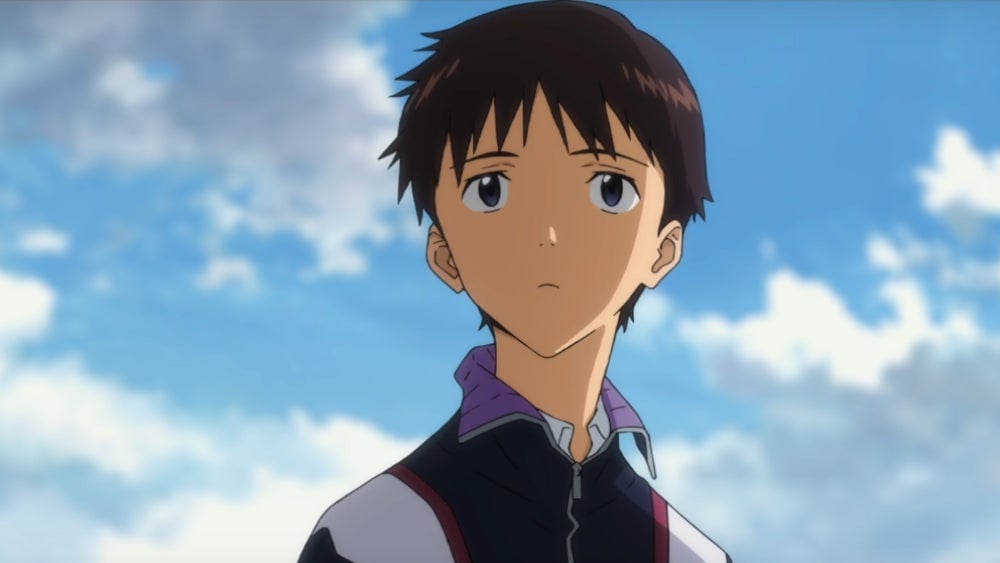
The Dawn of a New Era: Yoko Taro's Evangelion Announced
Few anime franchises command the same reverence, analysis, and fervent debate as Neon Genesis Evangelion. For decades, Hideaki Anno's magnum opus has challenged viewers with its deconstruction of mecha anime tropes, its deep psychological dive into trauma and identity, and its often-opaque philosophical musings. Now, as the franchise celebrates its 30th anniversary, a seismic announcement has sent ripples through the anime world: a completely new Evangelion series is in production, and at its helm as series composition and screenwriter is none other than Yoko Taro, the enigmatic creator behind the critically acclaimed NieR series.
The revelation came during the "EVANGELION:30+; 30th ANNIVERSARY OF EVANGELION" festival, specifically on February 23rd, a national holiday in Japan. This isn't just another remake or a simple re-telling of familiar events; the very presence of Yoko Taro suggests something profoundly different. Fans are abuzz with cautious optimism and wild speculation, hoping this new iteration will break free from the gravitational pull of its predecessors and venture into truly uncharted narrative territory. Will Yoko Taro's signature blend of philosophical depth, genre-bending storytelling, and often-bleak worldview redefine what Evangelion can be? The stage is set for a monumental shift.
The Creative Minds Behind the Machine: A Dream Team?
While Yoko Taro's name immediately grabs headlines, the team assembled for this ambitious project is a powerhouse of veteran talent and fresh perspectives, promising a rich tapestry of creativity:
- Series Composition & Screenplay: Yoko Taro – Known for his unconventional narratives, multiple endings, and profound existential themes in games like NieR: Automata, NieR Replicant/Gestalt, and the Drakengard series. Taro's involvement signals a strong potential for a narrative that challenges expectations and delves into complex character psychology. While some debate the extent of his writing credits on his earlier works versus Automata, his directorial vision and thematic influence are undeniable. His ability to craft worlds laden with sorrow, beauty, and fundamental questions about humanity aligns strikingly well with the core tenets of Evangelion. For a deeper dive into his potential impact, you might want to read Yoko Taro's Evangelion: Is Nier's Creator the Franchise's Future?
- Directors: Kazuya Tsurumaki & Toko Tanabe – Kazuya Tsurumaki is a name intimately familiar to Evangelion aficionados. A long-time collaborator with Hideaki Anno, he directed parts of the original series, The End of Evangelion, and notably co-directed the Rebuild of Evangelion films. His return brings a vital link to the franchise's legacy, while also offering the potential for new interpretation. Reportedly, Tsurumaki was displeased with Asuka's portrayal in the Rebuild films, a detail that could hint at a fresh direction for fan-favorite characters. Toko Tanabe’s involvement, while less detailed currently, adds another directorial voice to the mix, ensuring diverse perspectives in bringing Taro’s vision to life.
- Music: Keiichi Okabe – Another maestro from the NieR universe, Keiichi Okabe's scores are renowned for their haunting beauty, emotional weight, and genre-defying composition. His ability to evoke profound melancholy, epic grandeur, and unsettling tension makes him a perfect fit for Evangelion's famously impactful and often traumatizing soundscapes. Fans can expect a score that not only complements the narrative but actively shapes its emotional resonance, potentially delivering a fresh yet equally iconic auditory experience.
- Production: Studio Khara × CloverWorks – Studio Khara, Hideaki Anno's own studio, ensures a foundational connection to the franchise's spiritual home. Their collaboration with CloverWorks, known for popular and visually stunning series like The Promised Neverland, Spy x Family, and Bocchi the Rock!, promises a high level of animation quality and potentially innovative visual storytelling. This partnership could bridge the traditional aesthetic of Evangelion with modern animation techniques. If you're eager to learn more about the broader team and what they might bring, check out New Evangelion Series: Who's Behind It and What to Expect.
This confluence of talent suggests a bold attempt to honor Evangelion's legacy while decisively charting a new course. The decision to have Anno step back from writing duties, entrusting it to a creator like Taro, is a clear signal that this project aims to be an evolution, not merely a repetition.
Unpacking the Teaser: Themes of Time, Trauma, and Letting Go
While concrete plot details remain under wraps, initial observations from the teaser trailer offer intriguing glimpses into the series' potential thematic core. A central thread appears to be the passage of time, imbued with a sense of "so much time" having passed, yet the world paradoxically finds itself returning to familiar conflicts. This isn't just a simple cycle; it's a tension between the desire to move on and an inescapable pull back towards past traumas and unresolved issues.
The imagery of Eva Unit 01, strikingly similar to the phantom that consumes Gendo Ikari in The End of Evangelion, coupled with on-screen text proclaiming "Letting that soul rest," hints at profound themes of acceptance, stagnation, and perhaps even meta-commentary on the franchise itself. Could this new series explore the burden of legacy, the difficulty of finding closure, or the very act of a fictional world (and its fandom) grappling with its own unresolved past? Yoko Taro excels at narratives that question free will, the nature of memory, and the cyclical suffering of existence, making him uniquely suited to dissect these ideas within the Evangelion framework. His narratives often feature characters trapped by their past, making choices that echo previous failures or sacrifices. This thematic resonance could provide a fresh lens through which to examine the perennial questions Evangelion poses.
The phrase "Letting that soul rest" suggests a narrative drive towards resolution, not just for the characters, but perhaps for the very concept of Evangelion. After multiple endings, reboots, and reinterpretations, could this be the series that finally provides a sense of peace, or at least a new perspective on how to achieve it? It’s a tantalizing prospect for fans who have journeyed with Shinji, Asuka, and Rei through decades of anguish and revelation.
The Path Forward: Fan Hopes, Fears, and the Future of Evangelion
The announcement of a yoko taro evangelion project has naturally ignited a spectrum of reactions within the fandom. On one hand, there's tremendous excitement for the fresh perspective Yoko Taro, Kazuya Tsurumaki, and Keiichi Okabe could bring. The hope is for a drastically different, alternate take on the mythology or cast, or perhaps a far-removed spin-off with entirely new characters and themes, rather than yet another rehash of previous events. Many yearn for a story that truly pushes the boundaries of the Evangelion universe, exploring new corners or recontextualizing its core messages in a way only a creator like Taro could.
However, there's also an undercurrent of apprehension. Some fans question the necessity of more Evangelion, arguing that the original series and its cinematic conclusions already provided a complete narrative arc. Concerns about the project potentially being "boring" or suffering from "messy direction"—a criticism sometimes leveled at other projects by certain staff members—are valid anxieties. Evangelion is a franchise that thrives on its unique ability to provoke and challenge, and any new entry must live up to that incredibly high standard.
For Yoko Taro, this is a monumental opportunity. While his game narratives are widely praised for their uniqueness and depth, his direct writing credits on previous projects have sometimes been a point of contention among those scrutinizing his specific influence versus the broader creative team. However, with series composition and screenplay explicitly attributed to him, this Evangelion project offers a clear canvas for his distinctive vision. This could be his moment to prove unequivocally his capabilities as a lead writer in the anime format, bringing the kind of subversive storytelling, philosophical musings, and character-driven tragedy that fans have come to expect from his games.
Ultimately, the success of this new series hinges on its ability to strike a delicate balance: respecting the profound legacy of Neon Genesis Evangelion while boldly venturing into new narrative and thematic territories. With Yoko Taro at the helm, alongside seasoned Evangelion veterans and a celebrated composer, the promise of something truly unique and unforgettable is tantalizingly within reach. This isn't just another chapter; it's an opportunity for Evangelion to transcend its own history and redefine its future.
Practical Considerations for the New Series
- Embrace the Unknown: Fans should approach this series with an open mind, ready for a narrative that might diverge significantly from established Evangelion lore. Yoko Taro thrives on subverting expectations.
- Revisit Themes, Not Plots: Instead of expecting a new version of Shinji piloting Unit 01 against Angels, anticipate a deep dive into themes like trauma, identity, existentialism, and the human condition, which are core to both Evangelion and Taro's works.
- Listen Closely: Keiichi Okabe's score will undoubtedly be a character in itself. Paying attention to the music could provide early clues about the emotional and thematic direction of the story.
- Prepare for Philosophical Depth: Yoko Taro's works often feature intricate philosophical dilemmas and explore the darker aspects of human nature. This Evangelion is unlikely to pull any punches in that regard.
The journey ahead for the new Yoko Taro Evangelion project is shrouded in mystery, yet filled with immense potential. It represents not just a continuation of a beloved franchise, but a significant artistic endeavor to reimagine its essence for a new generation, under the guidance of one of the most unconventional minds in contemporary Japanese media.